

COMPLEXITIES OF THE KNEE COMPLEX
You know the diagnosis. You know what needs to happen. The patient still isn't tolerating load. That's not a protocol problem. That's a reasoning problem.
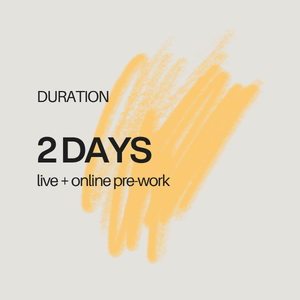
2 days · live weekend
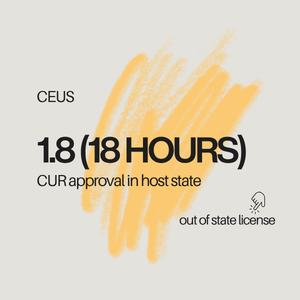
1.8 CEUs · 18 contact hours
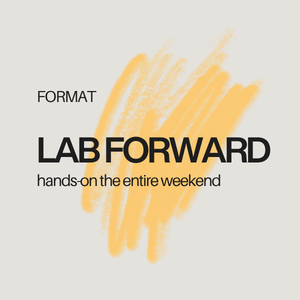
Lab Forward Format
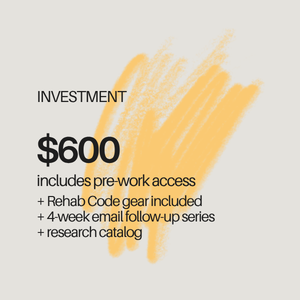
$600 investment

You've been treating knees long enough to know when something isn't adding up.
That inconsistency isn't a skill gap. It's a depth gap.
THE LOAD QUESTION
Your patient needs quad strength. Every loading strategy you try provokes. You back off. You try again. The window keeps moving. You're not guessing; you know your anatomy and your progressions, but you can't identify the variable driving the intolerance.
THE IDENTICAL CASES
Two ACL presentations. Same mechanism, same protocol, different outcomes. One progresses on schedule. The other plateaus at week four with no clear reason. The diagnosis didn't change. Something in the tissue did and you need a framework to read it.
THE SENSITIZED KNEE
Pain stopped following biomechanical logic three sessions ago. Loading provokes. Backing off doesn't reset. Managing central sensitization alongside a structural knee problem is one of the hardest scenarios in outpatient ortho. It requires a different lens entirely.
Most knee courses teach you what to do. This one teaches you why it works and what to change when it doesn't. Comprehensiveness here isn't a selling point. It's a clinical requirement.
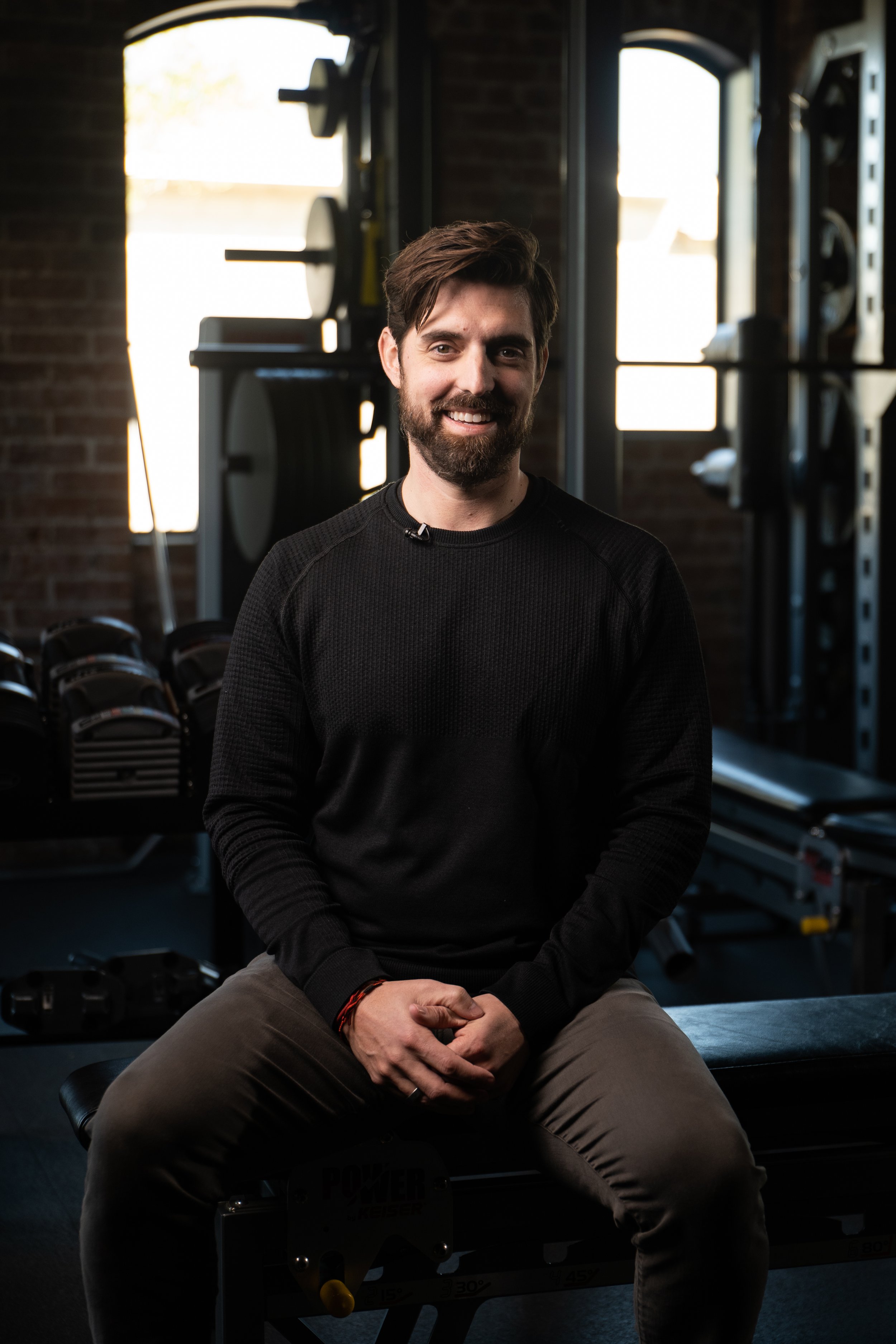
Jess Elis
PT, DPT, PhD, FAAOMPT, OCS, SCS, COMT, CSCS
YOUR INSTRUCTOR
Jess Elis has held executive medical leadership positions with two NBA organizations, the New York Knicks and the Portland Trail Blazers, following fellowship training in orthopedic manual therapy and his work at EXOS. He holds a PhD in the bioethics of wearable technology in professional sport.
That depth didn't come from a textbook. It came from almost leaving the profession before any of it happened.
After this course
What you'll do differently on Monday
Use symptom modification to confirm pathomechanics and move straight to manual therapy.
01
Symptom modification tells you what the tissue responds to. Manual therapy becomes the trial treatment that proves it.
Load patellar tendinopathy and patellofemoral syndrome correctly, even when the presentation isn't clean.
02
Same complex, opposite loading strategies. You'll know which one you're dealing with and exactly what that means for your progression.
03
Navigate the sensitized knee without abandoning your loading framework.
When pain stops following biomechanical logic, you'll have a lens for managing central sensitization alongside structural rehab rather than choosing between them.
Make return to sport decisions you can defend with criteria.
04
Clear mechanical rationale for when the tissue is ready. No more judgment calls made on feel alone.
Trusted by organizations across the country





Two days on the floor, built on 3+ hours of required online pre-work.
What you examine on day one is what you load on day two.

Day 1 — Assessment, manual therapy, and loading foundations
-
Normal ROM, gait mechanics, and how intra-articular versus extra-articular pathology changes your loading decisions from session one.
-
Grading, palpation, and Bernoulli's principle applied clinically. Understanding joint reactivity before you load it.
-
Full knee extension restoration, accessory rotation, screw home mechanism, and hip-knee coordination assessments.
-
Symptom modification as a real-time diagnostic tool, then immediate integration into quad-specific soft tissue and joint mobilization.
-
Quad and hamstring complex strength testing with HHD. Data that informs your loading decisions.
-
MRE application, constraint-based movement assessment, and compensatory pattern recognition.
-
Quad and soleus synergy
Day 2 — Hamstring complex, tendons, plyometrics, and return to sport
-
Biomechanics, soft tissue and neurodynamic techniques, and hip versus knee dominant training strategies with clear criteria for each.
-
A structure that rarely gets its own block. Manual therapy and integrated MRE for a muscle that matters more than most courses acknowledge.
-
Intensive versus extensive variations sequenced across a rehabilitation continuum.
-
Patellar tendinopathy versus fat pad irritation, reactive versus degenerative staging, and the loading decisions that determine whether a tendon adapts or breaks down.
-
One of the most undertrained capacities in knee rehab. Assessed, trained, and progressed as a distinct physical quality.
-
90 minutes on the hardest conversation in knee rehab. Criteria-based decision making and a reasoning framework for knowing when the tissue is actually ready.
What People Are Saying
*
What People Are Saying *
"Going into this course, I was hoping for a strong framework to help organize techniques and exercises. That is exactly what this course delivered. Actionable, logical, and evidence-based strategies to understand and affect a variety of knee conditions."
— Eathan Schultz · PT, DPT
"This course changed my approach to knee rehab. It dives into the nuances of decision making and treatment that directly improves outcomes."
— Brock Hanke · PT, DPT, OCS
"A clear, cohesive framework for knee treatment. Delivered with plenty of humor and an epic soundtrack. 10/10."
— Ben Kelto · PT, DPT, OCS, CSCS

Format and Pricing
FAQ
-
We have clinicians from every stage of their careers attend our courses, from new graduates to practitioners with 20+ years of experience. They often walk away with different takeaways, but they all find value in the discussions.
The course isn't built around how many years you've practiced. It's designed to strengthen your clinical reasoning and help you think more deeply about the decisions you make with patients. As long as you're curious, willing to ask questions, and open to challenging your current thinking, you'll fit right in.
If you're looking for a checklist of techniques or protocols, this probably isn't the right course. But if you're the type of clinician who constantly asks "Why?" and wants to become more confident reasoning through complex cases, you'll feel right at home.
-
Most continuing education teaches what to do.
We spend more time exploring why.
Rather than memorizing techniques or following protocols, you'll learn a framework for connecting anatomy, biomechanics, tissue adaptation, movement, and patient presentation into meaningful clinical decisions.
Our goal isn't to give you more information.
It's to help you think differently.
-
Absolutely. We love having clinicians from different backgrounds in the course.
While examples and discussions are often presented through a physical therapy lens, the principles of clinical reasoning, movement assessment, tissue adaptation, and rehabilitation apply across professions. If you're passionate about becoming a better clinician and enjoy asking why, you'll fit right in.
Formal CEU approval is currently available for licensed physical therapists in approved states. Attendees from other professions may be able to receive credit by independently submitting the course to their certifying or licensing organization. We're happy to provide the supporting documentation needed for that process.
-
Yes, but not in the way that term is often used.
Every recommendation is informed by current research, clinical experience, and the realities of treating patients in the clinic. We discuss where the evidence is strong, where it's evolving, and where thoughtful clinical reasoning becomes most important.
The goal isn't to chase the newest study.
It's to help you make better decisions when the evidence isn't perfectly clear.
-
Absolutely.
You can download the complete course schedule to see exactly what topics are covered throughout the weekend.
-
Yes.
If you'd like to know exactly what you'll learn, we've included the course objectives, which outline the educational goals and learning outcomes for the weekend.
-
You'll immediately receive a confirmation email and access to the course through Teachable.
Two weeks before the course, you'll receive access to the pre-course material. We intentionally release it close to the event so the concepts are fresh in your mind. This allows us to maximize our time together by focusing less on foundational information and more on meaningful discussion, clinical reasoning, and practical application.
As the course approaches, we'll also send venue details, reminders, and everything you'll need to arrive prepared for the weekend.
-
CEU approved for licensed physical therapists.
ATCs, DCs, and PTAs are welcome to attend though formal CEU credit is not available for those disciplines at this time.
-
Rehab Code submits for continuing education approval in the state where each course is hosted. Depending on your state's licensing requirements, you may also be able to receive credit through reciprocity or by independently submitting the course. We're happy to provide any documentation you need.
-
Definitely.
Many clinics choose to attend together because it creates a shared clinical language across the staff. When everyone approaches evaluation and treatment using similar reasoning, collaboration becomes easier long after the course ends.
If you're interested in registering a group, we'd love to help. Reach out to us and we'll walk you through the options.
Email support@therehabcode.com to discuss group registration.
-
Due to limited seating and advance planning required for each course, registrations are non-refundable.
If something unexpected comes up, please contact us as soon as possible. While we can't guarantee transfers, we'll always do our best to help find a reasonable solution.